You hike alone? Aren't you afraid?
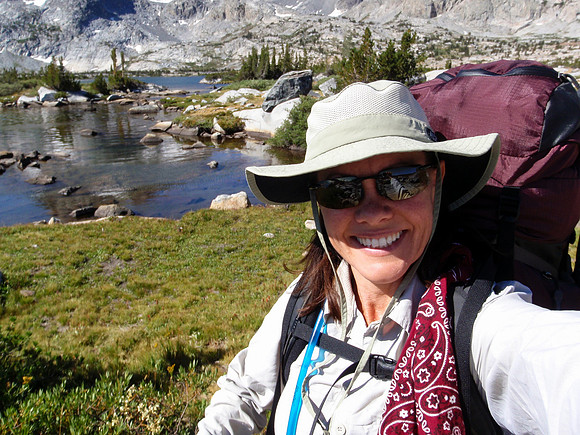

You hike alone? Aren’t you afraid?
It had been a great day! I’d set off at dawn on a solo hike of the Paradise Valley Trail out of Kings Canyon National Park. This beautiful 13 mile round trip takes hikers to incredible down-canyon views of the Sphinx , to the ferocious deluge of Mist Falls and up into serene and peaceful Paradise Valley. All in all it had been an awesome day of solitude and beauty. I’d seen only a few people on the trail and the quiet calm I get while hiking alone had settled in me. I was a peaceful, happy girl.
On the return trip, as I came round a bend in the path a couple miles from the trailhead, I saw a man standing to the side of the trail. All my instincts went on high alert - something wasn’t right about this guy. Maybe it was that he looked disheveled, that he wasn’t dressed for hiking, that he was wearing slip-on street shoes, that he had no pack, no water bottle, that he was a couple miles from the trailhead, that he was alone just standing there looking at me, like he was waiting for something. My mind processed all of this in a matter of seconds and my gut said this was no good. This guy might mean trouble for me . . .
I’m a woman. I hike alone. I backpack alone. When people find out I hike solo, I often hear: “You know you shouldn’t hike alone. It’s not safe. Do you carry a gun? What about bears/men/mountain lions? Aren’t you afraid? What if you get lost?” My response is usually, “I refuse to live my life limited by fear of what might happen.” And while that statement is true, the rest of the truth is that I prepare for the things that might happen, just in case. Because, even though they probably won’t happen, there’re things I can do to stack the deck in my favor. Do I recommend that you hike alone? That completely depends on you. It’s a personal decision that should not be taken lightly because the cost of a mistake could be your life. But missing out on the solo hiking experience can cost you all the wonderful things you’ll gain from such experience. So here’re some things to consider:
- Know yourself: your comfort level, physical capabilities, your knowledge, your limits, your pace, and your water and food requirements. As a new hiker, I paid close attention to my pace - how long it took me to go a certain distance over particular terrain. Not only does this aid in route finding, but also when I make a hiking plan in the first place, I know it is feasible for me in the time I have. I know how much water I’ll need depending on how warm it is and my level of exertion. I know that I feel better with a consistent, even fuel intake, rather than eating only a few times a day. I know that I don’t quit when I get uncomfortable or even have pain. I’m stubborn and determined. This can be both a good and bad thing. I have a positive attitude. Know yourself because you will be the only one you can rely on out there. Self-reliance is real in the backcountry.
- Know where you’re going and what the dangers might be. Know how to read a map and navigate. Before I set out on my own, I look over maps of my intended hike. I read trail descriptions. I generally get so familiar with the hike that by the time I set foot on the trail, I know where I’m going without a map. But I always bring a map and compass when I have little or no experience on a trail. Always. I also take my GPS, but not always. If I think route finding could get tricky, I take the GPS for back up. I never take it for my primary source of navigation. I consider things like whether the route has areas of vertical exposure, ledges, scrambling, stream crossings, lack of or confusing landmarks. I plan my hikes over terrain within my physical and technical abilities.
- Be prepared. Changes in the weather, getting injured, getting lost, having to bivvy overnight in an emergency; I plan for as much as I can ahead of time. From short simple day hikes to multiday backpacks, I always take an emergency kit that contains water purification, fire starter, emergency bivvy sack for shelter, notepaper and pen, head lamp, backup batteries, basic first aid kit with pain reliever, duct tape, compass, trash bag (not for trash but for everything from making shelter to collecting water), emergency rain poncho, extra warmth layers and my SPOT satellite messenger. Most of the kit (minus the clothing) fits in a quart size baggie. I set out on every day hike prepared to spend the night outside unexpectedly, and that includes day hikes away from my base camp while backpacking. Heck, I even take the kit when I head into the woods for a potty break. Ever heard of someone getting lost after going off trail to "answer the call of nature"? I have. Call it overkill: I call it being able to stay alive.
- Know what might want to eat you .I would never hike solo in grizzly bear country, but I feel comfortable alone in black bear country. I know the difference between the two and know how to behave if I confront black bear. When backpacking, I store food away from and keep a clean camp to discourage a bear visit. If I am hiking in a narrow, steep canyon area where mountain lions could be hanging around, I don’t run, I don’t squat down and look small. I stay upright and know how I should react if attacked. I know how to avoid being bit by a rattlesnake and what to do if it happens. I know that given the right circumstances, even deer can attack. As beautiful as wildlife is, it good to remember the “wild” part. Odds are you won’t have a dangerous wildlife encounter but just in case, do your homework.
- Know the likelihood of coming upon a creep. Statistically, unlikely. Even so, I consider the remoteness and difficulty of the trail when thinking about whether I should worry about coming upon a creep, aka rapist. I figure there’s much easier ways for a rapist to grab an unknown victim than hiking miles over rugged terrain to get to her. Honestly, most people I meet in the wilderness are good, friendly people and genuinely concerned for the welfare of those they meet on the trail. However, there are bad people in the world and it pays not to be too naïve. I stay alert when coming toward and passing someone on the trail. I generally don’t volunteer that I’m alone. I even lie if I feel it in my best interest. Do I carry a weapon? That’s not something I’m willing to share, even here. Am I paranoid? No. I’m careful.
There’re other considerations for a safe hiking and backpacking trip. I’ve only highlighted those that take on even greater importance to me when I’m hiking alone. My motto: Be prepared, not afraid.
When I saw that creepy guy on the trail in Kings Canyon, I was on alert. He seemed out of place. And while I thought the trail remote enough to dissuade the average creep, it wasn’t really out in the middle of nowhere. I looked at him as I passed. A few steps away, I scooped up a large tree branch with menacing protrusions, like a medieval club. I picked up my pace and stayed on high alert for the remainder of the hike. Did he come after me? No. Was it because he didn’t know I was alone, because I had a mean looking weapon in my hands, because I didn’t carry myself like a victim and look afraid, or because he wasn’t really a creep? I’ll never know, thankfully.
The reality is: that has been the only time, over the many days and miles I’ve spent in the wilderness, where I felt afraid someone might harm me. More common have been moments of fear when I was temporarily misdirected, when the weather took a turn for the worse or when an important piece of gear malfunctioned days from the trailhead. All of those moments have taught me that with proper preparation and a level head, hiking solo can be a rich, rewarding, fearless endeavor.
The image below, Minaret Lake, is from a recent backpacking trip that started solo and ended with friends joining me. It was a spectacularly beautiful backpacking adventure. I selected my solo campsite well away from the main trail, not only as precaution to avoid being seen by too many passersby but also my preference for solitude and privacy. Minaret Lake is in the Ansel Adams Wilderness of the Inyo National Forest.

